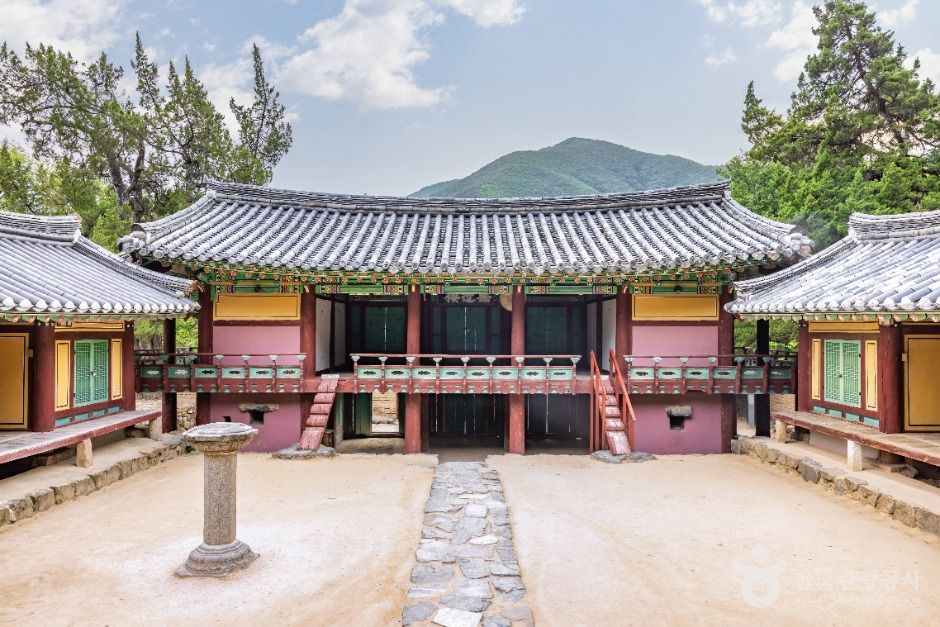
Oksan Seowon
📍 GyeongjuGyeongju's Oksan Seowon honors Yi Eon-jeok, pen name Hoejae, a Neo-Confucian scholar of the Joseon dynasty, whose scholarship passed on to Yi Hwang (Toegye) and became a forerunner of the Yeongnam school of Neo-Confucian thought.
It was first built in 1572, the 5th year of King Seonjo's reign, by Yi Je-min, governor of Gyeongju, and was granted a royal charter the following year under the name "Oksan." It follows a "study-front, shrine-back" layout, with Guindang, the study hall, in front, and Cheinmyo, the shrine hall, behind. Guindang burned down in 1839, the 5th year of King Heonjong's reign, and was rebuilt with its current hip-and-gable roof. Other buildings include Yeongnakmun, the main gate; Mubyeollu, a two-story hall; and the student dormitories Mingujae and Amsujae.
Oksan Seowon is one of just 47 sacred-charter academies that survived Regent Heungseon Daewongun's sweeping order to abolish seowon academies in the late Joseon dynasty — thanks to which Yi Eon-jeok's writings, along with calligraphy by renowned scholars of his era and various literary collections, remain well preserved to this day. In recognition of this historical and cultural value, it was inscribed on the UNESCO World Heritage list in 2019 as part of "Seowon, Korean Neo-Confucian Academies."
Automatic GPS audio guide — in the app
Enter an attraction’s radius and narration plays automatically. Works offline. Free.
▶ Get it on Google Play


