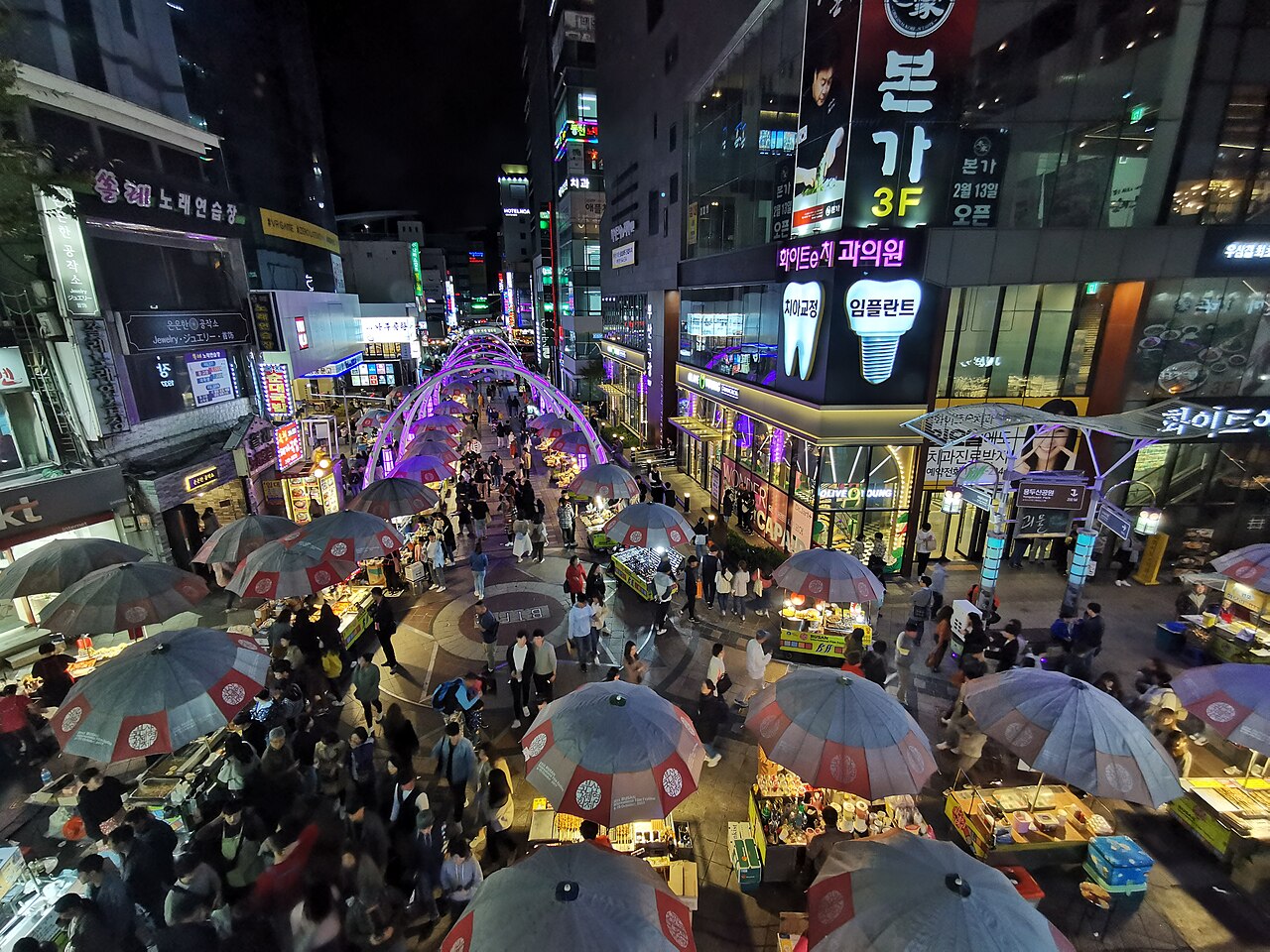
Gukje Market
📍 BusanThis market took shape as refugees from the Korean War poured into Busan.
It began as 'dottaegi' street stalls selling goods left behind by departing Japanese right after Korea's 1945 liberation. As the war drew refugees from across the country and a mix of US military supplies and smuggled goods from various countries flowed through, the market earned its name 'Gukje' — meaning 'international.'
The 2014 hit film Ode to My Father is set here, tracing modern Korean history through one family's story, and the sign for the film's fictional shop, 'Kkotbunine,' still stands inside the market today, drawing fans who come looking for it.
From clothing and household goods to imported groceries and electronics, the market's maze-like alleys are packed with shops selling just about everything, and next door, Bupyeong Kkangtong Market transforms into a night market each evening, drawing crowds for street food.
Honestly, though, the alleys are a genuine maze — easy to get lost in on a first visit — and on weekend afternoons it can get packed enough to make walking through difficult.
If you're hunting for the 'Kkotbunine' sign, it's quickest to ask a market information board or a vendor for directions; for the night market, head toward Bupyeong Kkangtong Market after 6pm.
Most shops open around 10am and close around 8-9pm (closing days vary by shop), and it's about a 10-minute walk from Jagalchi or Nampo Station (Line 1).
Automatic GPS audio guide — in the app
Enter an attraction’s radius and narration plays automatically. Works offline. Free.
▶ Get it on Google Play



_Island,_Oryukdo_-_panoramio.jpg/1280px-DeungDae(Lighthouse)_Island,_Oryukdo_-_panoramio.jpg)
